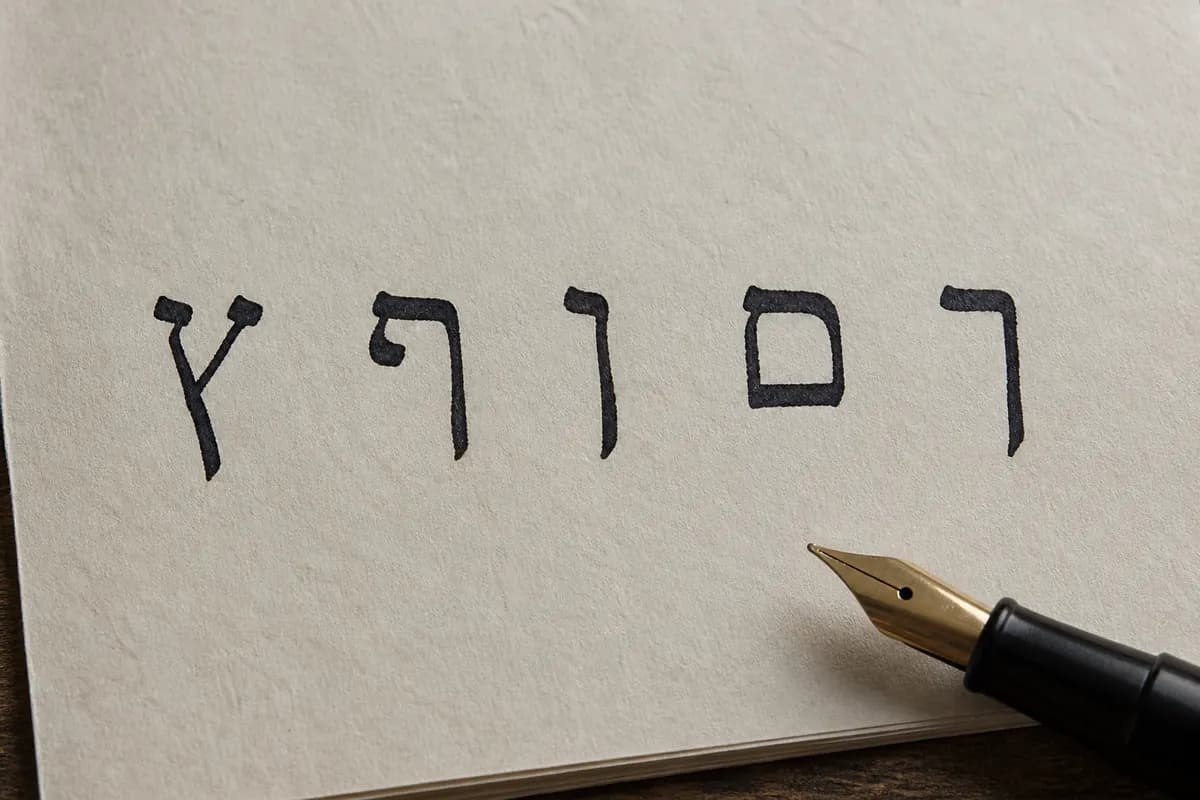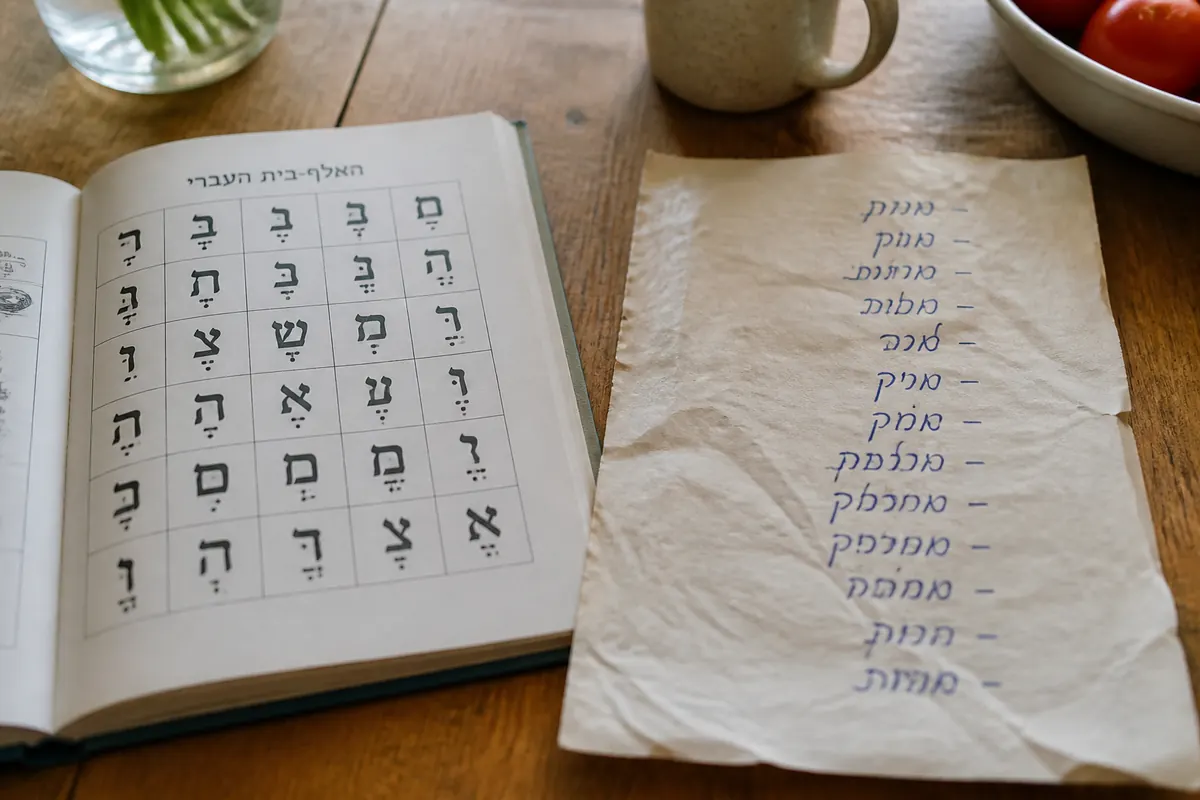
I spent a winter on flashcards. Aleph, bet, gimel. I could pass a quiz on my phone in under a minute. Then a friend sent a photo of a note on a fridge in Tel Aviv and I stared at it like it was a different language.
It was Hebrew. Just not the Hebrew on my cards.
The note I could not read
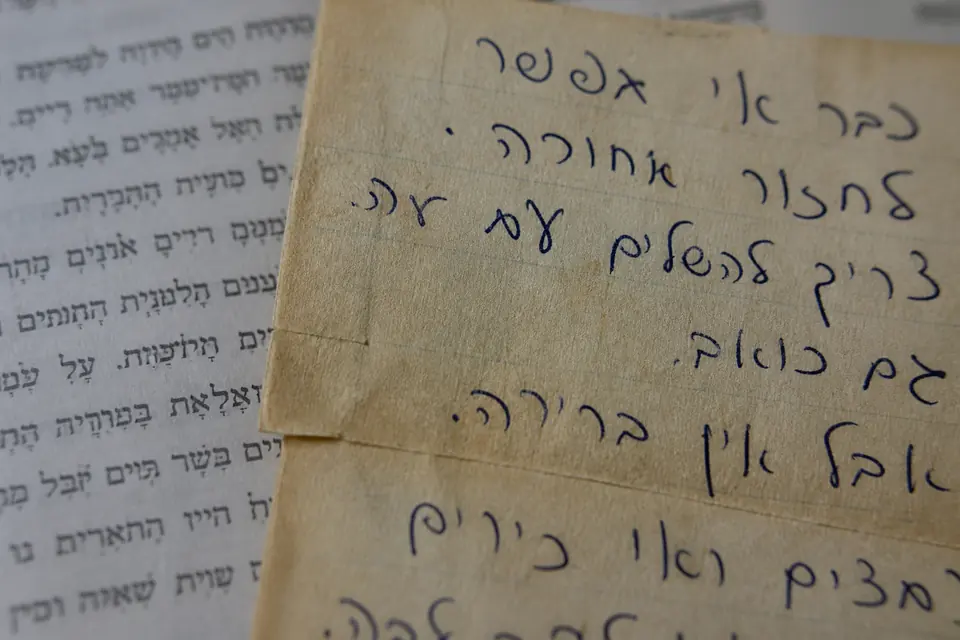
The first letter was a loop with a tail. I guessed gimmel. It was a lamed. The next one looked like a Latin “n.” It was a mem. I put the phone down and felt stupid in a very specific way: not “I have not studied enough,” more “I studied the wrong object.”
Textbooks teach print. Street notes, classroom boards, and most Israeli adults write Ktav Yad. Same names. Same sounds. Different drawings.
If you only know print, you did not fail. You learned the display font. Handwriting is the other face of the letter.
Why print knowledge barely helps
I assumed cursive would be “print, but faster.” That is how I treat English. Hebrew does not work that way for a beginner.
Bet in print is a box with a base. In Ktav Yad it is closer to a rounded C that sits on a line. Shin in print is three arms. In handwriting it can look like a Latin “W” that forgot to finish. Aleph is the one that still makes me pause. The printed aleph is a slash with a bar. The handwritten aleph is two strokes that do not advertise themselves as the same letter.
So I stopped translating. I stopped asking “which print letter is this trying to be?” I asked “what is this shape, as itself?”
That sounds small. It cut my error rate in half in a week.
What I do now when I see a new letter
I put print and Ktav Yad on the same line. Same name underneath. I trace the cursive first, even if it feels sloppy, then the block form so I still recognise signs and books.
I do not wait until print is “mastered.” Mastery of print is how I delayed handwriting for months.
If a letter has a final form, I add that on the same day. Kaf without ך is a half-letter. I learned that the hard way on a spelling of “melekh.”
The trap of mixing the two
For a while my notebooks were a hybrid. Print shin, cursive nun, a Latin R pretending to be resh. Nobody in Israel writes like that. My own notes became unreadable a week later.
Pick a script for the line you are writing. If I am copying a prayer book, I use print. If I am writing a to-do, I use Ktav Yad. I do not splice them in one word.
If you are stuck where I was
Take one Israeli handwritten word. Shalom is enough. Trace it slowly. Then look at the print version. Do not congratulate yourself until you can write the cursive without looking at print first.
That is the gap the fridge note showed me. Not vocabulary. Shape.
Frequently Asked Questions
Quick answers to common questions.
No. It is the same 22 letters. The shapes are different enough that print knowledge barely transfers. Treat Ktav Yad as a second set of outlines, not as messy print.
Related Articles
View All →
I could sound out Hebrew. I still couldn't write a letter.
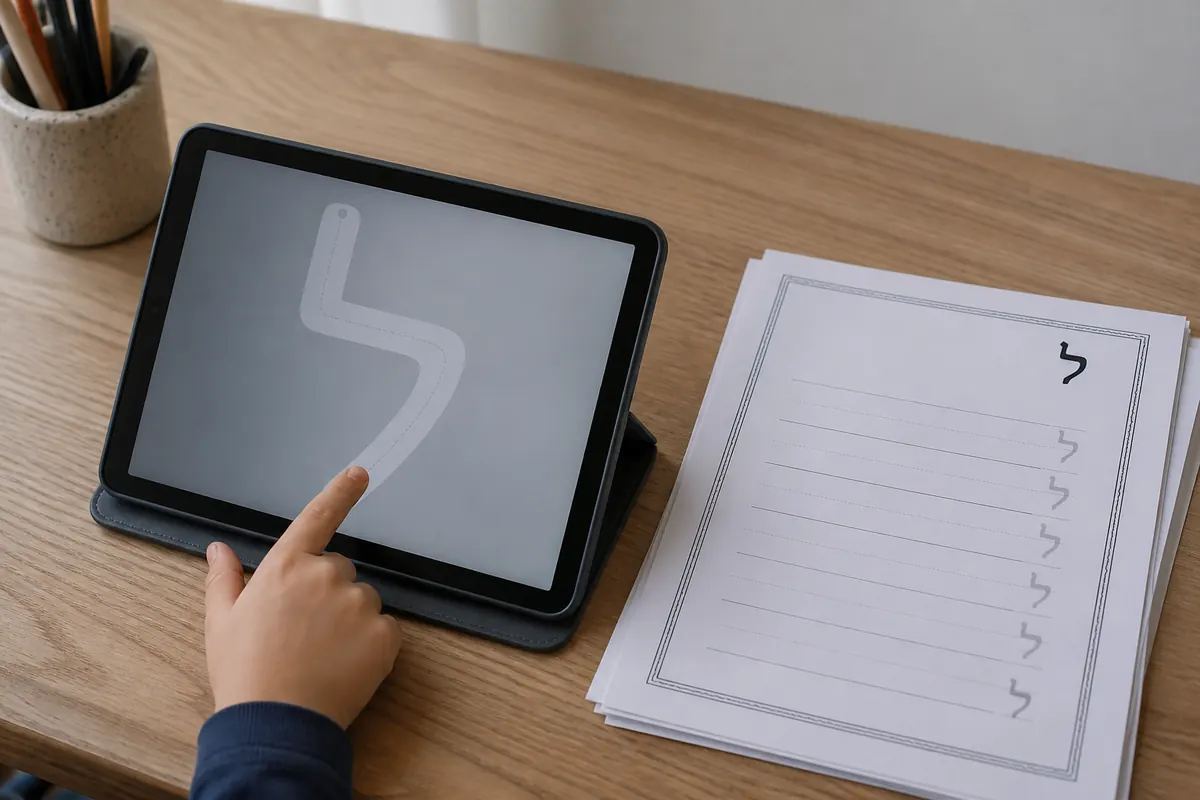
Workbooks didn't stick. Tracing the letter on a screen did.