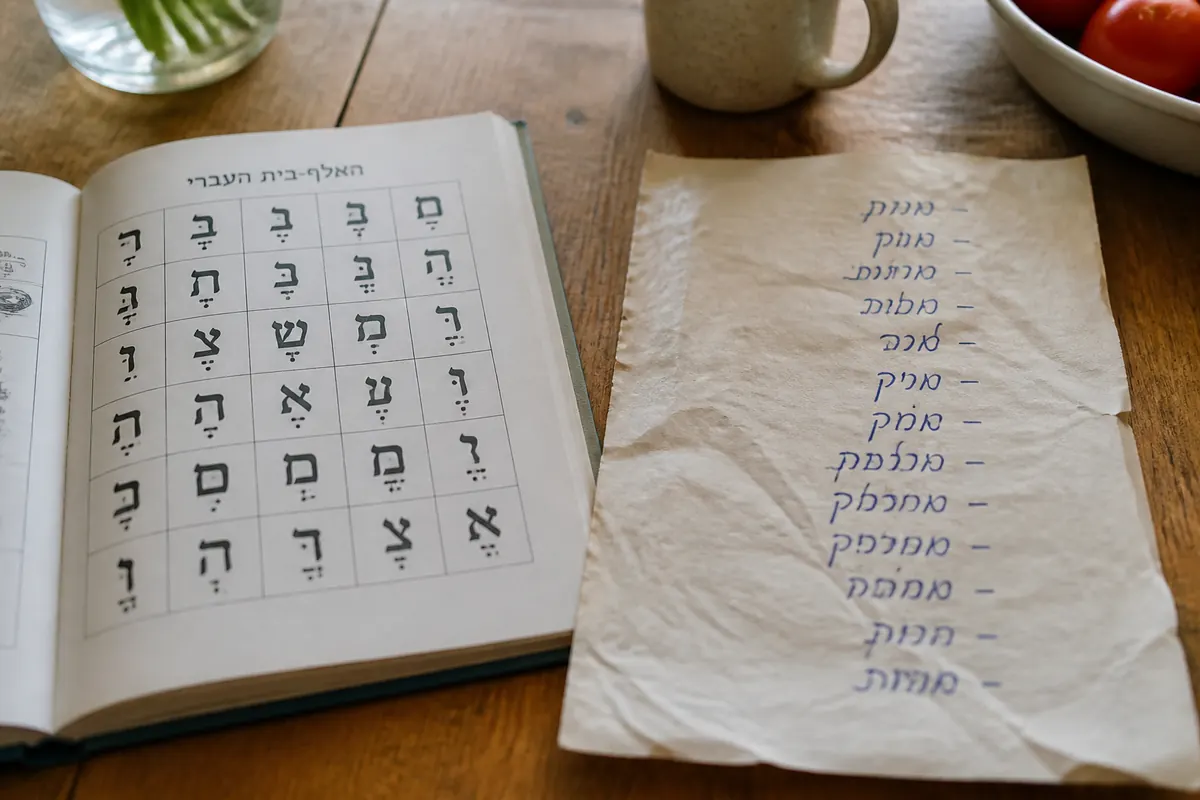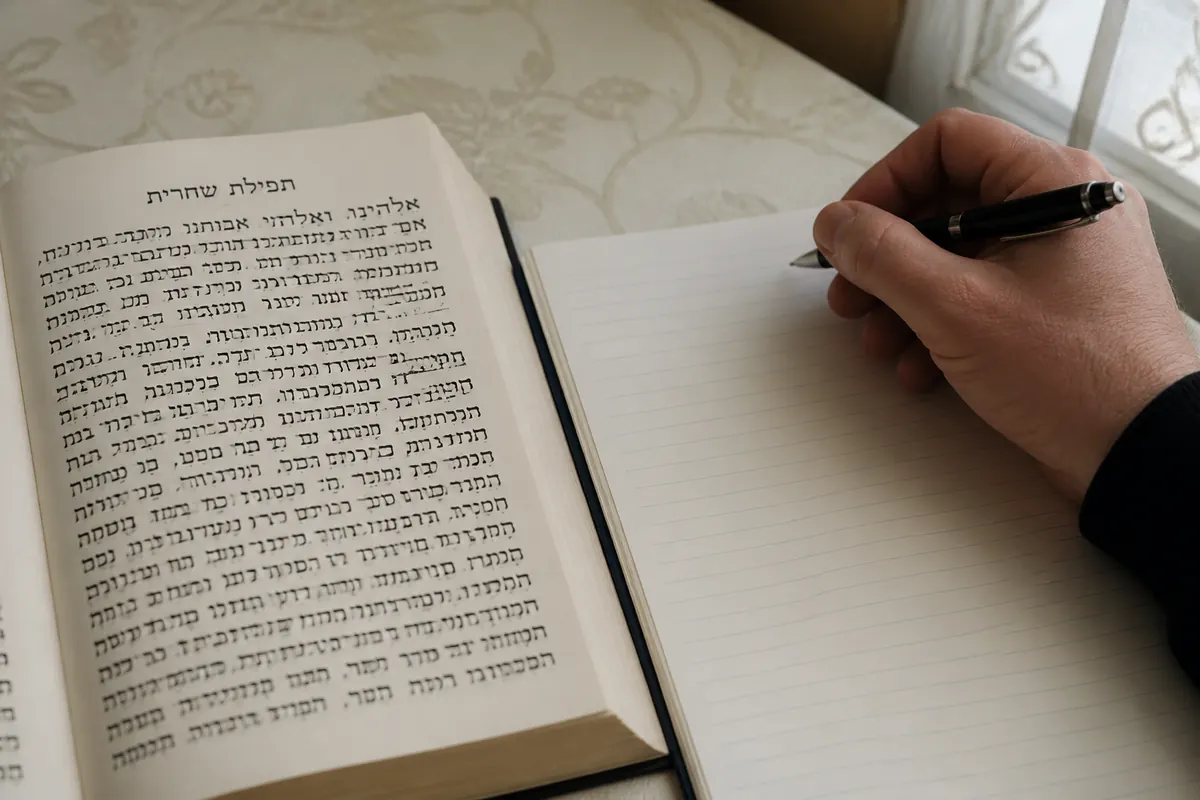
I could tap a letter on Duolingo and pick “shin.” I could whisper a verse I had heard a hundred times. Put a pen in my hand and ask for the same shin, and I drew a candelabra that would have embarrassed a five-year-old.
That gap is not a mystery. I had trained my eyes. I had not trained my hand.
Recognition is cheap. Production is not.
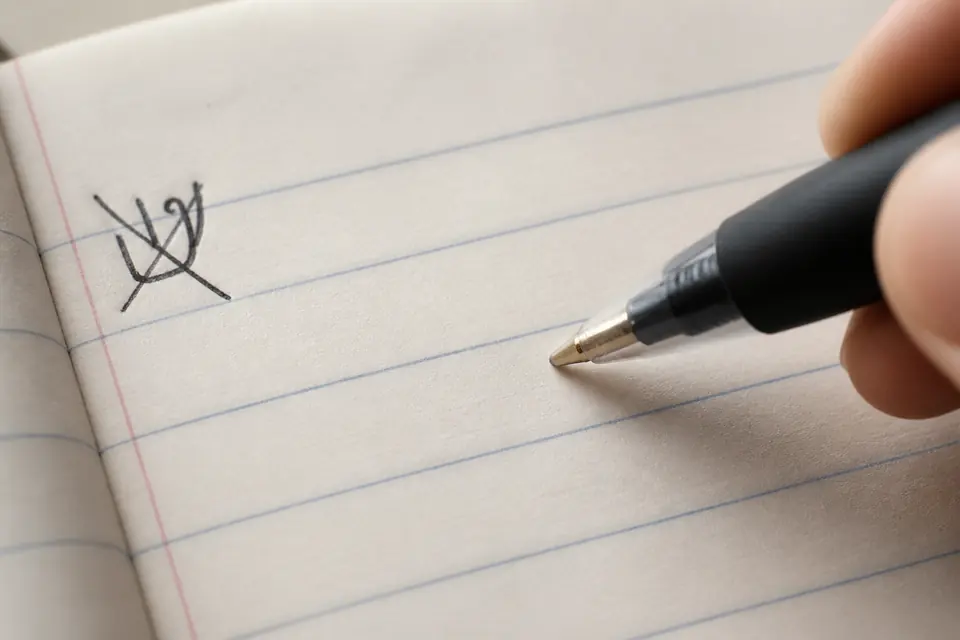
A quiz shows you four glyphs and one English name. Your brain is matching. Writing starts from nothing: empty line, right side of the page, a letter you have to emit.
I kept doing more quizzes because they felt like progress. My scores went up. My page stayed empty. The night I noticed that, I closed the app and wrote aleph twenty times. Nineteen of them were wrong in a new way.
Wrong was useful. The quiz never told me my second stroke started too high.
What actually moved the needle
I stopped studying “the alphabet” as a set of 22 facts. I studied one letter as a motion.
For each letter I did the same ugly routine:
- Look at print and Ktav Yad next to each other, so I knew which world I was in.
- Trace the outline slowly, not artistically. I wanted the path, not a pretty page.
- Write it once without the outline. If it collapsed, back to the outline. No pep talk.
- Do not collect a whole row of failures. Fix the one stroke that kept breaking.
Shin broke on the middle arm. Lamed broke because I started it like a Latin L from the left. Mem sofit broke because I treated it like a closed square.
None of that shows up in a multiple choice.
I wasted months on worksheets I never filled
I printed a beautiful aleph-bet sheet. It sat on the table. Filling 40 empty lines felt like homework from a class I was not enrolled in.
What I needed was one letter, large, with a ghost outline, and a pass bar that told me “this one counts.” When the outline was gone and the shape still held, I went to the next letter. That is the whole method. It is boring. It works.
If you already read, do not restart from vocabulary. You do not have a Hebrew problem. You have a handwriting problem. Treat it like learning a new sport with an old brain.
The first word I could actually write
I wanted “shalom” too early. I could not write shin, lamed, or mem cleanly, so the word was a pile of guesses.
I wrote shin until it was boring. Then lamed. Then mem. Then the word. It took longer than a slogan. It is the only word in my notebook I can still read a month later.
If you can sound Hebrew out and you still freeze at a pen, you are not behind. You skipped a skill. Go back and give that skill a week. Not a curriculum. A week of actual strokes.
Frequently Asked Questions
Quick answers to common questions.
You can. I did, for a year. Then I could not fill a form, label a notebook, or copy a word off a board. Reading stayed. The blank line stayed blank.
Related Articles
View All →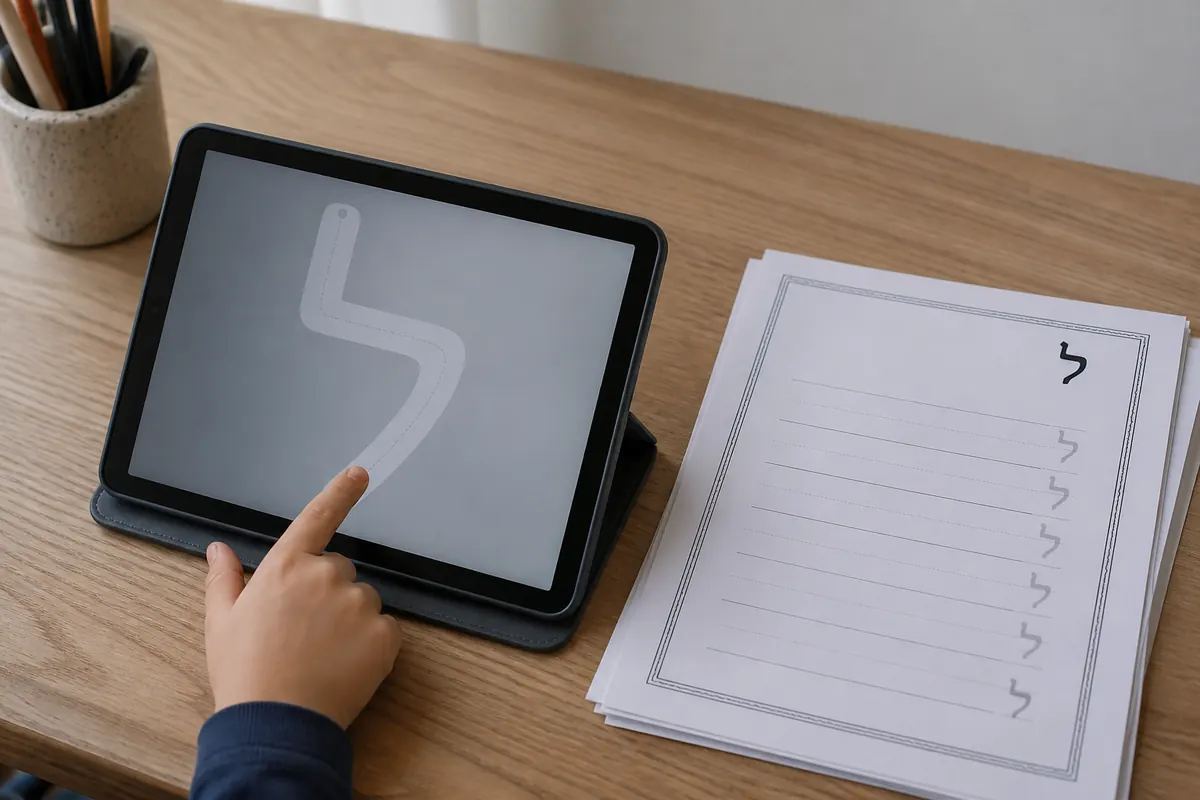
How to write Hebrew letters (the way a hand actually learns them)
Workbooks didn't stick. Tracing the letter on a screen did.