Ten minutes is short enough to protect from a busy day and long enough to teach one honest thing. The trick is to give every minute a job.
Minute 0–2: retrieve yesterday
Do not open the chart first. Write yesterday's letters from memory, even if the first attempt is ugly. Then check the model and mark only the detail you missed.
Retrieval feels worse than recognition because it is harder. That is exactly why it tells you what your hand actually knows.
Minute 2–6: trace one or two letters
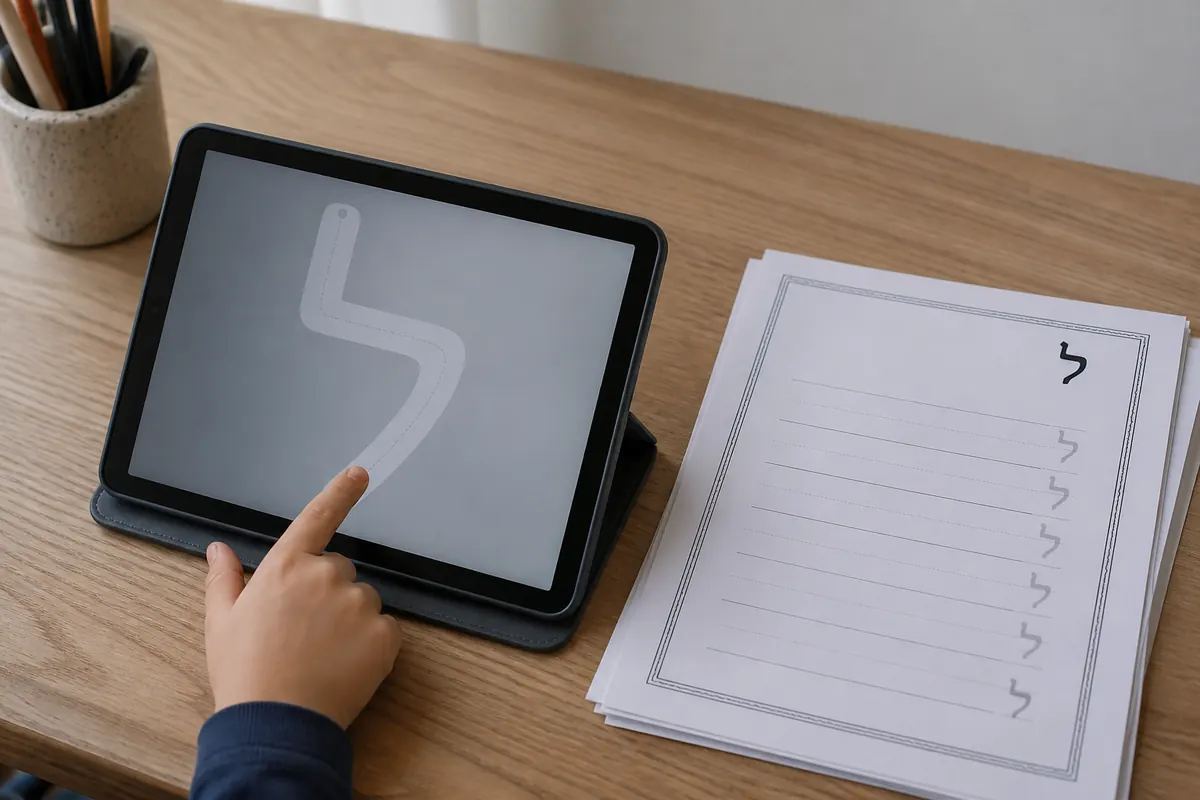
Pick one new letter, or two only when the first one feels stable. Trace a large outline slowly. Then trace it again with less help. Keep the stroke path consistent instead of filling the page with automatic loops.
The Hebrew alphabet practice page works well for this stage because a letter can be large enough to follow with a finger before you ask a pen to reproduce it.
Minute 6–8: write without the guide
Hide the model. Write the letter three times. If all three are unrecognisable, reveal the guide, trace once, and try again. If two of the three are recognisable, move on. Perfection is not the checkpoint; independent recall is.
Minute 8–10: read a short sequence
Mix today's letter with two older letters. Point, name, and say the common sound where you know it. If a letter has a final form, keep that for a later session unless the word requires it. The five final forms are important, but they do not need to crowd the first ten minutes.
What to do on busy days
Use a minimum version: write three old letters and one new letter once. The habit survives when the minimum is genuinely small. Tomorrow, return to the full ten-minute loop.
After a week, add one contrast drill for letters that look alike, such as dalet and resh. After two weeks, add right-to-left writing to the final two minutes. After the print alphabet is comfortable, begin Ktav Yad.
The goal is not to win a quiz once. It is to meet a Hebrew letter next week and still know what your hand should do.
Frequently Asked Questions
Quick answers to common questions.
Yes, if the goal is steady recognition and writing over several weeks. Ten minutes will not make the whole alphabet permanent in a weekend, but it is enough for useful daily practice.
Related Articles
View All →
How long it actually took me to learn the Hebrew alphabet
The first Hebrew letters to learn (and why this order works)