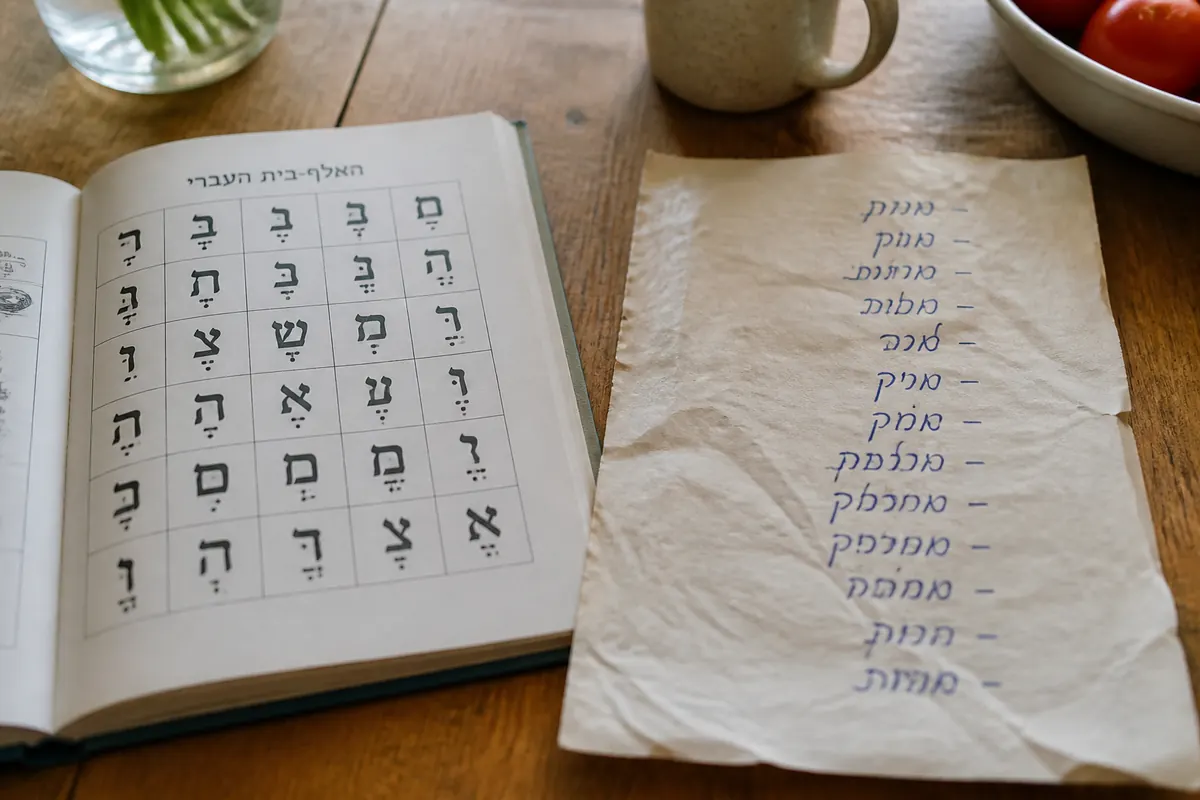
Hebrew vowels are easier when they arrive after the alphabet. The consonants are the map; nikud adds pronunciation guidance to the map.
What nikud does
Nikud consists of small points and lines placed around letters. It can show a vowel, distinguish a pronunciation, or mark a reading tradition. Children's books, prayer books, dictionaries, and beginner materials use it more often than ordinary adult prose.
Modern Hebrew frequently omits nikud. Readers use the consonant pattern, known vocabulary, and context. That is why learning to recognise the alphabet remains useful even when a page looks almost vowel-free.
A sensible order
First learn the 22 letters and their sounds. Next read pointed syllables slowly. Then compare a pointed word with the same word without nikud. Do not turn the first alphabet lesson into a catalogue of every mark.
For handwriting, vowel points are a reading layer, not a reason to delay practising the letters. Use the beginner alphabet guide as the foundation.
Frequently Asked Questions
Quick answers to common questions.
Hebrew vowel marks are commonly called nikud, or nikkud. They are small points and lines placed around consonant letters.
Related Articles
View All →
Hebrew alphabet pronunciation guide for beginners